July 12, 2020
When we think of window problems, we normally think of the visible catastrophes: cracks, mold, that one drafty window you can’t seem to shut all the way…
What don’t we think of?
Window energy use.
Windows don’t use energy directly, so we tend to overlook their role in our monthly utility bills. However, windows can be surprisingly large contributors to your home energy consumption—they’re some of the sneakiest culprits when it comes to inefficient temperature regulation. Even when they’re not broken, older single-pane windows make your heating and AC work harder during their respective seasons.
Luckily, we now have a solution in Low-E glass.
In this piece, we’ll take you through the ins and outs of Low-E, tell you how it works, and outline the energy-efficient benefits.
 Low-Emissivity (Low-E) glass has a special coating on its surface designed to minimize the amount of infrared and ultraviolet light that passes through it while still appearing transparent to the human eye.
This coating is usually made of invisible layers of metal or metal oxide that reflect thermal radiation and reduce the amount of heat that is transferred through the glass. This helps to keep buildings cooler in the summer and warmer in the winter, reducing energy costs and improving overall comfort.
Originally designed to trap heat in colder climates, Low-E glass now dominates the market as a great option for eco-friendly windows with surprising financial benefits.
What does Low-E glass do?
Low-E glass reduces infrared and ultraviolet light transfer, which when used in external windows helps maintain consistent internal temperatures all year round. That means during the summer, it reflects infrared rays on the outside to keep your home cool. During the winter, it reflects those same rays back inside to preserve heat.
What makes this technology so incredible is that while Low-E reflects infrared and ultraviolet rays, it lets short-wavelength rays (or visible light) pass through freely—leaving you with all of the sunshine and none of the burn.
Types of Low-E Glass Coatings for Windows
There are two main types of Low-E glass coatings for windows:
Solar Control Low-E coatings (or soft-coat/sputter-coat coatings) are applied to window glass after the glass is cut. These coatings are slightly less durable, but tend to be slightly more effective at controlling infrared and UV rays.
Passive Low-E coatings (or Hard-Coat coatings) are applied to window glass during the glass production process while the glass is in the molten stage. These coatings harden with the glass and create more durable panes, but may have slightly lower energy efficiency than soft-coat. However, because they require fewer steps to produce, they are typically cheaper than soft-coat Low-E glass.
Low-Emissivity (Low-E) glass has a special coating on its surface designed to minimize the amount of infrared and ultraviolet light that passes through it while still appearing transparent to the human eye.
This coating is usually made of invisible layers of metal or metal oxide that reflect thermal radiation and reduce the amount of heat that is transferred through the glass. This helps to keep buildings cooler in the summer and warmer in the winter, reducing energy costs and improving overall comfort.
Originally designed to trap heat in colder climates, Low-E glass now dominates the market as a great option for eco-friendly windows with surprising financial benefits.
What does Low-E glass do?
Low-E glass reduces infrared and ultraviolet light transfer, which when used in external windows helps maintain consistent internal temperatures all year round. That means during the summer, it reflects infrared rays on the outside to keep your home cool. During the winter, it reflects those same rays back inside to preserve heat.
What makes this technology so incredible is that while Low-E reflects infrared and ultraviolet rays, it lets short-wavelength rays (or visible light) pass through freely—leaving you with all of the sunshine and none of the burn.
Types of Low-E Glass Coatings for Windows
There are two main types of Low-E glass coatings for windows:
Solar Control Low-E coatings (or soft-coat/sputter-coat coatings) are applied to window glass after the glass is cut. These coatings are slightly less durable, but tend to be slightly more effective at controlling infrared and UV rays.
Passive Low-E coatings (or Hard-Coat coatings) are applied to window glass during the glass production process while the glass is in the molten stage. These coatings harden with the glass and create more durable panes, but may have slightly lower energy efficiency than soft-coat. However, because they require fewer steps to produce, they are typically cheaper than soft-coat Low-E glass.
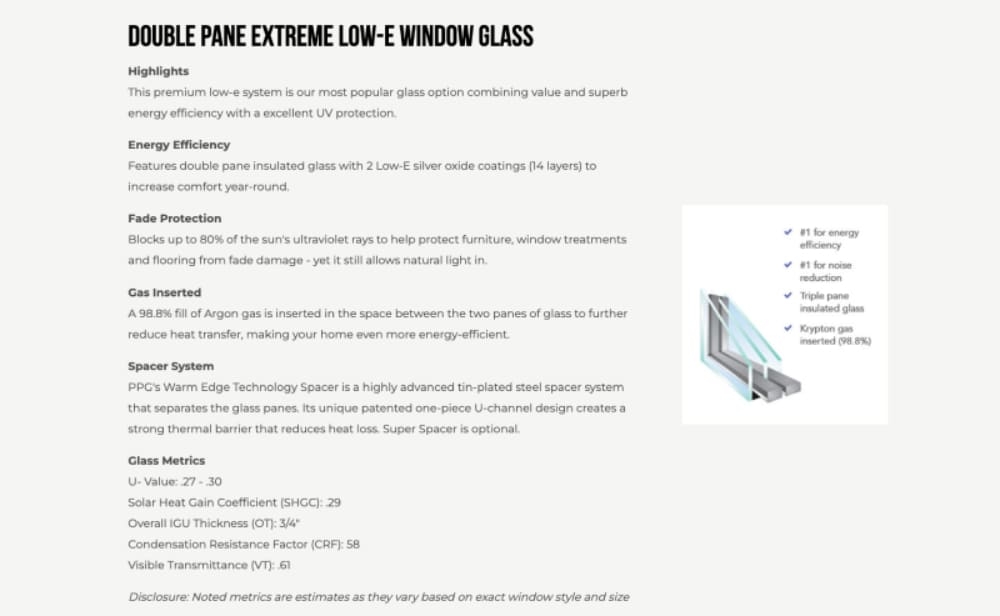 On the bottom, under Glass Metrics, you’ll find various measurements. In this case, we have:
What is Low-E glass?
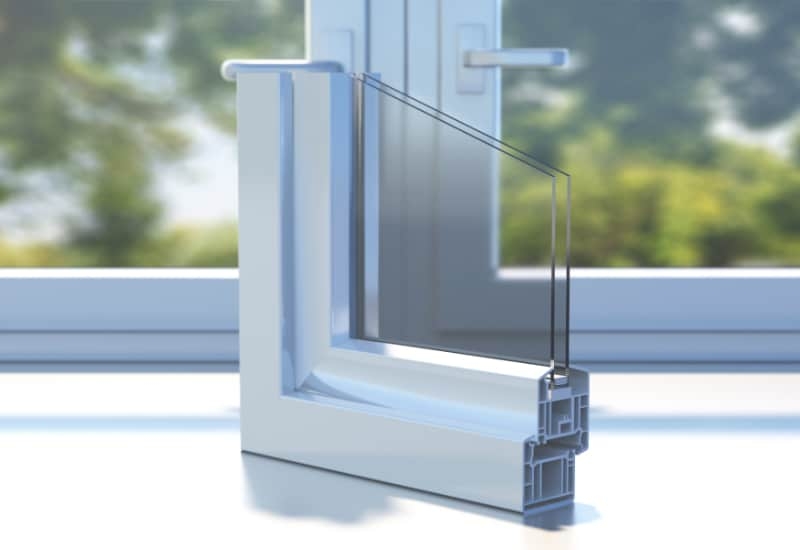
Low-Emissivity (Low-E) glass has a special coating on its surface designed to minimize the amount of infrared and ultraviolet light that passes through it while still appearing transparent to the human eye.
This coating is usually made of invisible layers of metal or metal oxide that reflect thermal radiation and reduce the amount of heat that is transferred through the glass. This helps to keep buildings cooler in the summer and warmer in the winter, reducing energy costs and improving overall comfort.
Originally designed to trap heat in colder climates, Low-E glass now dominates the market as a great option for eco-friendly windows with surprising financial benefits.
What does Low-E glass do?
Low-E glass reduces infrared and ultraviolet light transfer, which when used in external windows helps maintain consistent internal temperatures all year round. That means during the summer, it reflects infrared rays on the outside to keep your home cool. During the winter, it reflects those same rays back inside to preserve heat.
What makes this technology so incredible is that while Low-E reflects infrared and ultraviolet rays, it lets short-wavelength rays (or visible light) pass through freely—leaving you with all of the sunshine and none of the burn.
Types of Low-E Glass Coatings for Windows
There are two main types of Low-E glass coatings for windows:
Solar Control Low-E coatings (or soft-coat/sputter-coat coatings) are applied to window glass after the glass is cut. These coatings are slightly less durable, but tend to be slightly more effective at controlling infrared and UV rays.
Passive Low-E coatings (or Hard-Coat coatings) are applied to window glass during the glass production process while the glass is in the molten stage. These coatings harden with the glass and create more durable panes, but may have slightly lower energy efficiency than soft-coat. However, because they require fewer steps to produce, they are typically cheaper than soft-coat Low-E glass.
Benefits of Low-E Glass
We know Low-E glass increases energy efficiency, but what does that really mean for you and your home? Let’s take a look at a few of the striking benefits of Low-E glass. You’ll pay less for heating and cooling. Since Low-E glass is more energy efficient—it reduces energy loss by up to 50%—Low-E windows help regulate indoor temperatures so your heating and AC won’t have to work as hard. This can result in significantly lower energy bills and reduce the overall carbon footprint of your home. Your house will stay comfier. With high-grade Low-E windows, your home stays cooler in the summer and warmer in the winter. Increased extreme weather in your area? Not to worry. Low-E windows will keep you comfortable inside all year round. Your furniture and skin will be protected from UV rays. UV rays are no longer just a danger on the beach—they’re a danger in your home. UV (ultraviolet) rays have increased significantly over the past 30 years. As a result, you might find that fabrics, floors, and furniture near windows fade and discolor more quickly—not to mention the dangers of UV exposure and skin cancer. With Low-E glass, you can reflect those rays away from your home and keep your belongings and yourself in tip-top shape.Disadvantages of Low-E Glass
Low-E glass has no disadvantages, but it does require a bigger upfront financial investment than non-Low-E glass. While prices on Low-E glass have gone down over the years, it’s still the most expensive window glass option on the market. However, with energy bills increasing and more energy efficiency tax breaks popping up, investing in Low-E windows is looking more and more financially sound every year.What makes a good Low-E glass?
Low-E glass energy efficiency is measured in four ways:- U-Value: How much heat loss/retention the glass allows.
- Light-to-Solar Gain: The ratio between the amount of infrared light and visible light the glass allows.
- Solar Heat Gain Coefficient (SHGC): The amount of solar radiation allowed through the glass (whether transmitted or absorbed).
- Visible Light Transmittance (VLT): The amount of visible light allowed through the glass (from outside to inside).
On the bottom, under Glass Metrics, you’ll find various measurements. In this case, we have:
- U-Value: 0.27-0.30
- Light-to-Solar Gain: 0.61/0.29
- Solar Heat Gain Coefficient (SHGC): 0.29
- Visible Light Transmittance (VLT): 0.61 (note that VT is sometimes substituted for VLT)
FAQs
Still unsure about Low-E glass? Not to worry. Let’s dive into a few FAQs.Does Low-E glass make your house darker?
Not always. Most Low-E glass does come with a slight tint and reflects a small percentage of visible light. However, different levels of Low-E coating reflect different amounts of light. If you have a home that naturally gets plenty of sunlight, you won’t suddenly be living in a dark cave. At the end of the day, Low-E windows are still windows and you’ll be able to see out of them with ease.How can homeowners tell if their windows have Low-E glass?
Most of the time, you’ll know if your home has Low-E glass when you buy it. Low-E glass is now a top selling point and a smart realtor will certainly let you know. That said, if you want to double-check, you can always do a quick flame test. Different types of glass react very specifically to flames. In a standard glass window, you should see four flames reflected on the glass, but they’ll all be the same color. A Low-E window produces one reflection of a different color due to its coating.How much does Low-E coating cost?
Low-E window glass costs approximately $40-$55 per square foot. However, you can also purchase Low-E film that you can lay over standard window glass for additional Low-E effects. Low-E film is cheaper than Low-E glass—it averages about $25 per 75 square feet. However, Low-E film requires frequent replacement and doesn’t provide the same level of efficiency as Low-E glass.Which is better, Low-E or double-pane glass?
Low-E glass is better than double-pane glass when it comes to energy efficiency. However, both types of glass have their merits depending on what you want in your home. Double-pane glass still provides more insulation and better energy efficiency than single pane glass without dipping into the higher pricing of Low-E. Do note that double- and triple-pane glass can also come with Low-E coating for even greater benefits.Is Low-E glass single- or double-pane?
Modern Low-E glass is almost exclusively double-pane, which helps increase the durability and lifespan of the soft-coat Low-E coatings. However single-pane options are available for anyone looking to make a historical home more energy efficient. If you want to apply Low-E to a single pane window, we highly advise consulting with an expert.